"Buy the big one, it works out cheaper" is the sort of thing everyone believes and nobody checks. We run four Swisse stores with their own price lists, so we checked it.
We took every product we stock in more than one pack size, divided each price by the count printed on the front, and compared the two numbers. Fifteen families qualify, covering 31 products, across four countries.
The short answer: the rule holds most of the time, the size of the saving is wildly inconsistent, and on one pair it does not hold at all.
Compare pack sizes with unit prices already calculated in the product comparison tool. You can switch category or change products in the same tool.
How much cheaper is the bigger Swisse pack?
The answer changes by product and by country, so each row below is a range rather than a single number. The low end is the store where the big pack saves least; the high end is the store where it saves most.
| Product | Big pack | Small pack | Per unit, big | Per unit, small | Cheaper per unit |
|---|---|---|---|---|---|
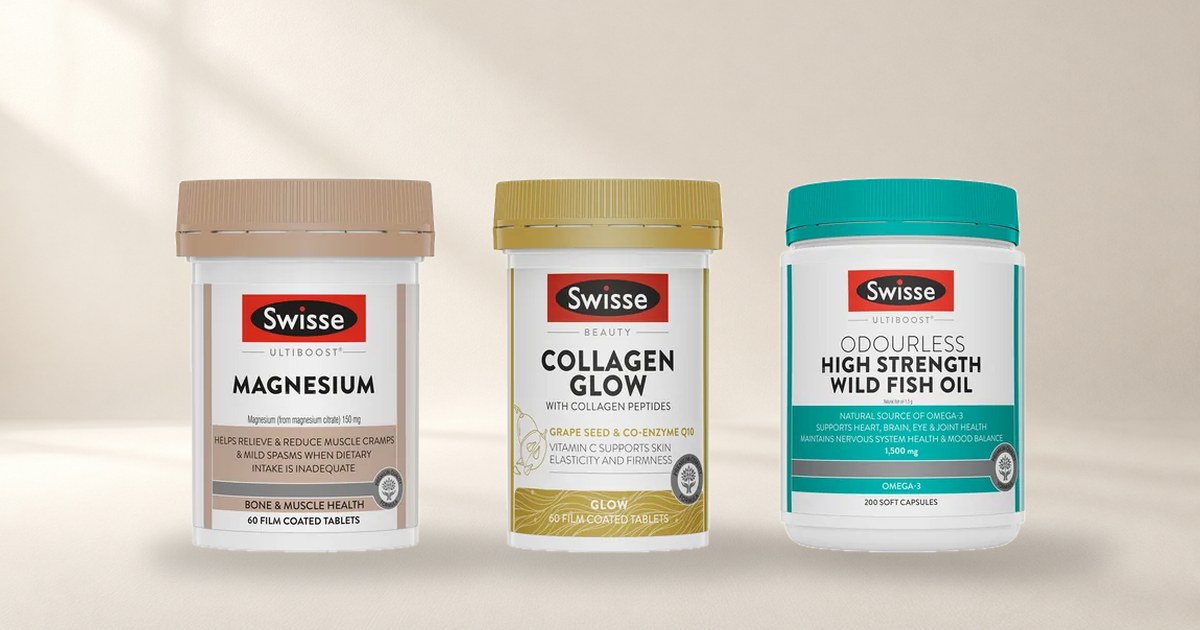
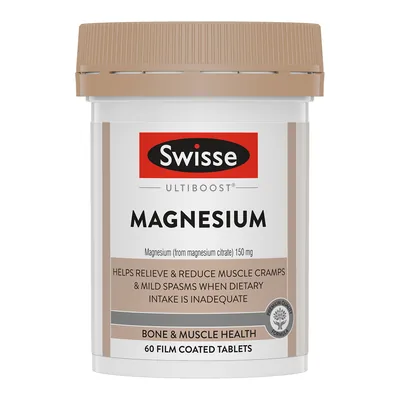
| Ultiboost Magnesium | 200 tab, RM 197.00 | 60 tab, RM 99.00 | RM 0.99 | RM 1.65 | 40 to 57% |
| Ultivite Women's 50+ | 90 tab, RM 189.00 | 60 tab, RM 183.00 | RM 2.10 | RM 3.05 | 15 to 31% |
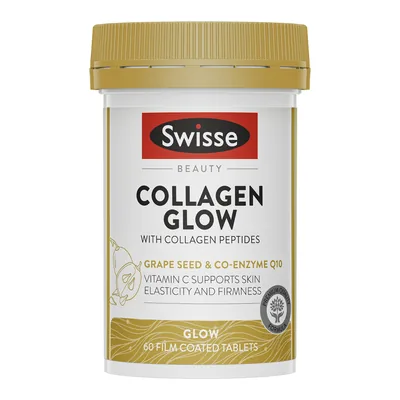
| Beauty Collagen Glow | 120 tab, RM 145.40 | 60 tab, RM 120.00 | RM 1.21 | RM 2.00 | 19 to 39% |
| Ultiboost Magnesium Glycinate | 120 tab, RM 193.00 | 60 tab, RM 125.00 | RM 1.61 | RM 2.08 | 22 to 27% |
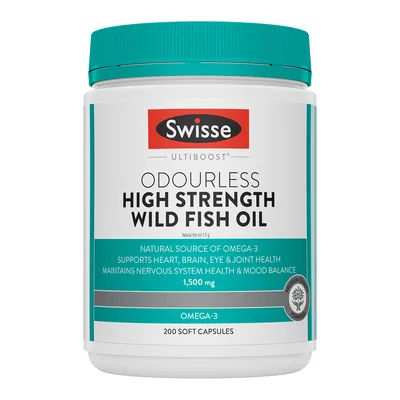
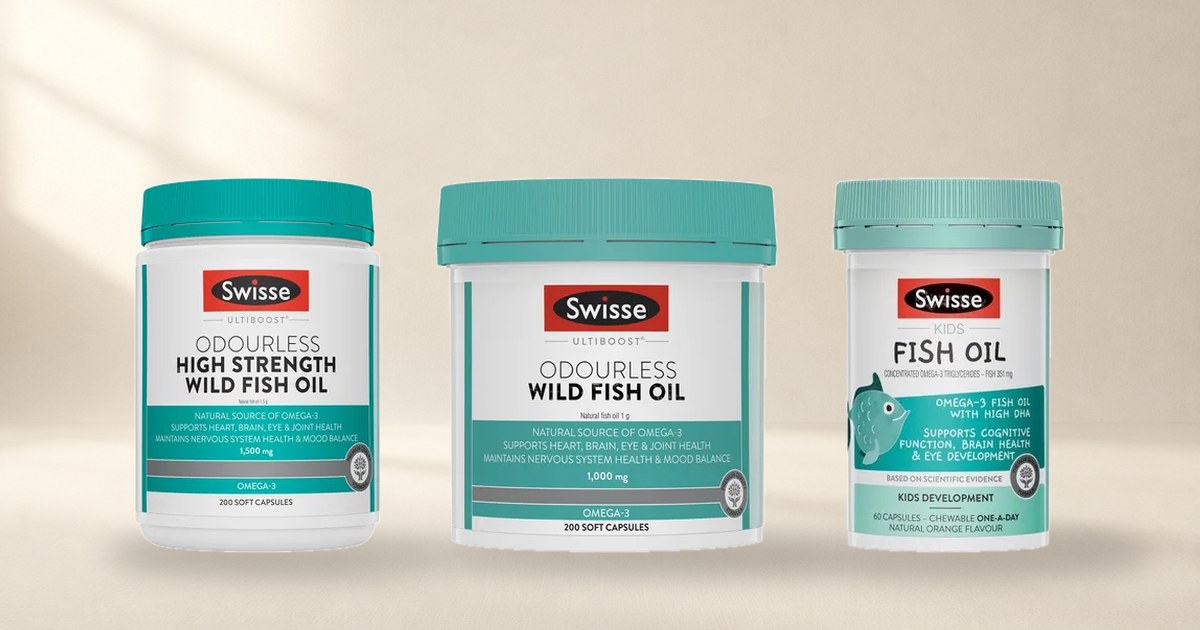
| Odourless Fish Oil 1000mg | 400 cap, RM 170.00 | 200 cap, RM 100.00 | RM 0.42 | RM 0.50 | 9 to 15% |
Malaysia prices, read on 18 September 2026. The last column is a range because the same pair costs different amounts in each of the four stores.
Read the two per-unit columns rather than the two prices. Ultivite Women's 50+ is the row that shows why: the big pack costs RM 6.00 more at the till, which looks like almost nothing, and it holds half as many tablets again. That is RM 2.10 a tablet against RM 3.05 — a third off — hiding behind a six-ringgit difference.
Magnesium is the outlier at the top. In our Malaysia store the 200-tablet bottle is RM 197.00 and the 60-tablet is RM 99.00, so the small one costs RM 1.65 a tablet and the big one RM 0.99. Across the four stores that gap runs from 40% to 57%.
Fish oil is the outlier at the bottom. The 400-capsule bottle saves 9 to 15% per capsule over the 200, which is real money on a bottle that size but is not the same kind of decision.
Notice how little the ranges overlap. A saving of 9% and a saving of 57% are both "the big one is cheaper", and reading them as one fact is how people end up buying a year of something they have never taken before.
Where does the rule break?
On one pair, and it is worth knowing which.
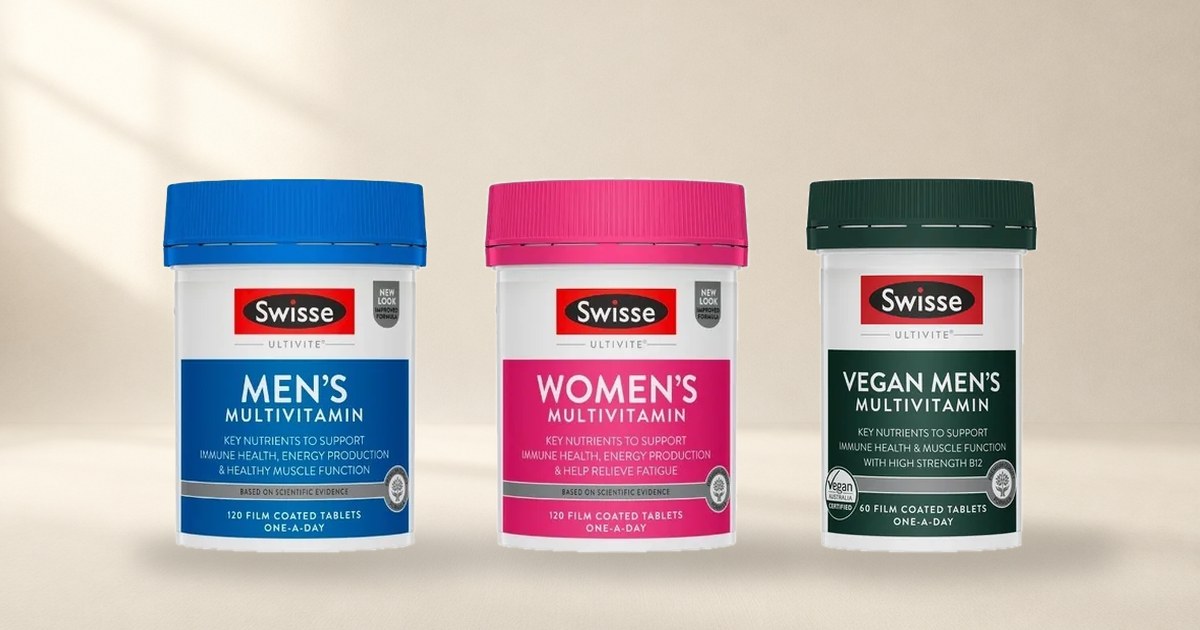
Swisse Ultivite Men's Multivitamin comes as 120 capsules and as 60 tablets. In three of our four stores the 120 is cheaper per unit, by 18 to 31%. In the fourth, the 120-capsule pack costs 72% more per unit than the 60-tablet.
Before reading that as a mistake, look at the format word: one is capsules and the other is tablets. They are not the same pack of the same thing, so this is not a like-for-like premium. It is still the opposite of what "buy the big one" would have told you to do, by a wide margin.
That is the real lesson. The assumption is right often enough to feel like a rule and wrong often enough to cost you.
It also tells you where to look. When two packs of the same formula have different unit prices by a wide margin, check the format word at the end of the name before you decide one of them is a bargain.
Why do the savings differ so much?
Because pack sizes are priced product by product, in each country, rather than by a formula. Nothing on the box promises a per-tablet discount, and no rule anywhere says the 200 has to be proportional to the 60.
Currency, local cost and what each store carries all move independently too. Our four stores hold different numbers of products at different prices, which is why every figure on this page is a range rather than a number.
There is no conspiracy in that and no pattern to learn. It simply means the per-unit question has to be asked again in the store you are actually buying from, and asked again the next time, because a price that moved once can move again.
How do I work out the per-tablet price?
Divide the price by the count on the front. That is the whole method.
- Find the count. It is the second-to-last thing on the name, just before the format word.
- Divide the price by it.
- Do the same for the other size and compare the two numbers, not the two prices.
Our product pages list the sizes we stock of the same formula together for exactly this reason, so the two counts and the two prices sit on one screen instead of in two tabs. The same is true on a shelf: the multivitamins collection shows every pack we carry with its price beside it.
The count is easy to miss because it is not where you expect. It sits second to last in the product name, just before the format word, after everything about who the formula is for. On a long Ultivite name that is a lot of words to read past.
Is the bigger pack always the right buy?
Not automatically, and price per tablet is only one of the inputs.
A bigger bottle is a longer commitment to one product. If you have not taken it before, the smaller pack is the cheaper way to find out whether you will finish it, and a bottle you abandon at 20% has cost you far more per tablet than either number on this page.
Format is worth a look too, because it is not always the same across pack sizes: in three of the fifteen families the big pack and the small pack are not even the same form. If you would rather start from the ingredient than from the pack, Ingredients A to Z links every nutrient to the products that carry it.
The other input is the expiry date. It is printed on the pack, it moves with the batch, and it is the one figure we cannot publish here for that reason. A 400-capsule bottle taken one a day is a fourteen-month commitment, and that is worth a glance at the date before the per-unit number wins the argument.
Questions people ask
Is the 200-tablet Swisse magnesium cheaper than the 60?
Per tablet, yes, by a wide margin. Across our four stores the 200-tablet bottle works out 40 to 57% cheaper per tablet than the 60. In our Malaysia store that is RM 0.99 a tablet against RM 1.65.
Does the bigger Swisse pack always cost less per tablet?
No. It usually does, but we found one pair where the bigger pack costs 72% more per unit. That pair is also two different formats, capsules against tablets, so it is not a like-for-like comparison. Do the division rather than assuming.
Why is the same Swisse product a different price in each country?
Each of the four stores prices its own list in its own currency, and they carry different numbers of products. That is why every saving on this page is a range rather than a single figure, and why browsing by what you are looking for in your own store beats comparing a price you read somewhere else.
How do I find the pack sizes you stock?
Every product page lists the sizes we stock of that formula together, with their prices, so you can compare per-unit without opening a second tab. The store bar at the top of the page switches country.
Which Swisse products come in more than one size?
Fifteen families in our catalogue do, covering 31 products. In three of those fifteen the two packs are different formats as well as different counts, which we wrote about in what the range names mean.
Every price on this page was read from our own four store listings on 18 September 2026 and will move. Availability differs by country: the bar at the top of the page switches store, and the finder only ever shows what your store actually carries.